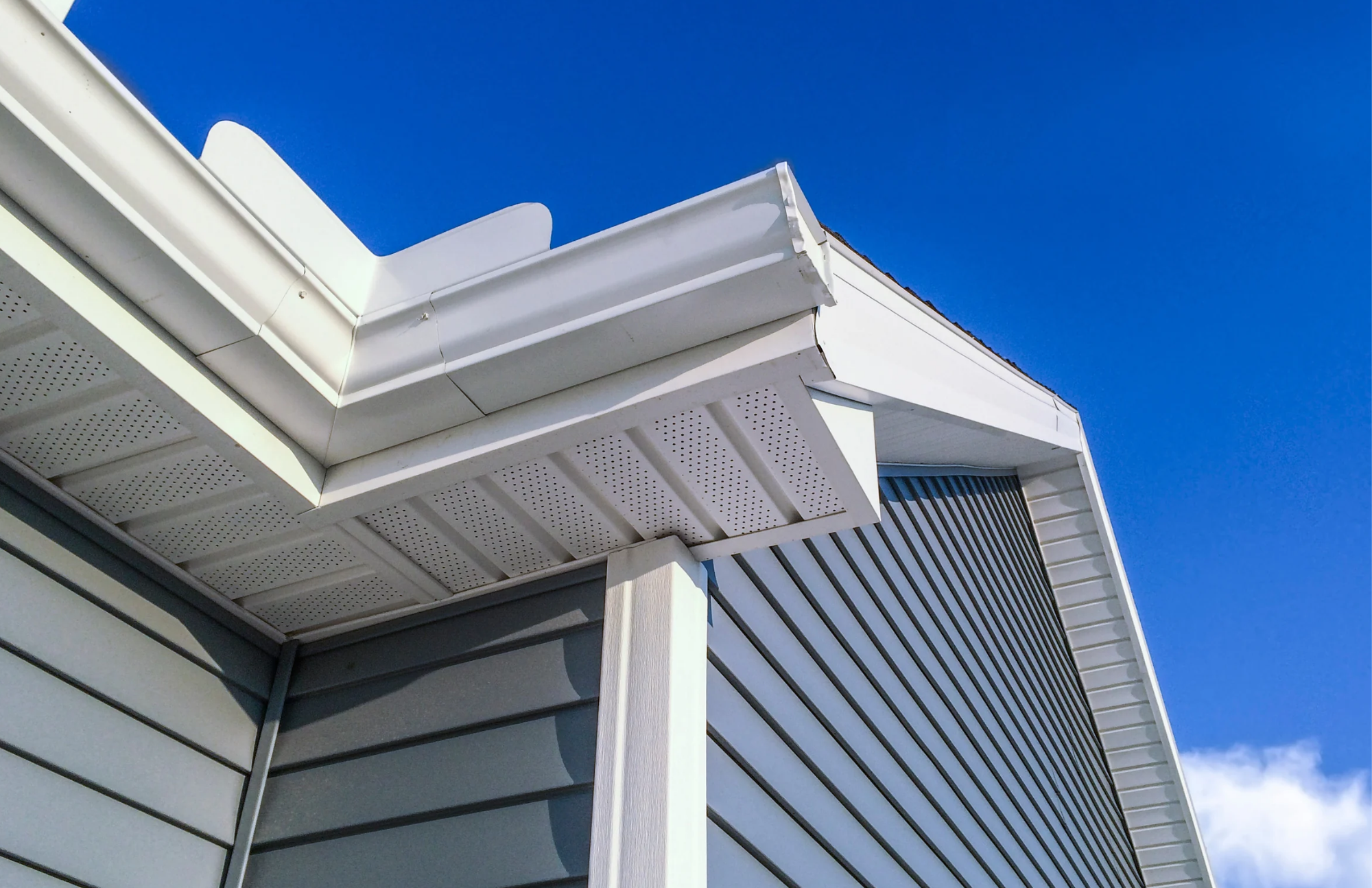
If you live near the water in Rhode Island, you’ve probably noticed it on your car first. A fine, gritty film on the windshield after a breezy day, even when you’re a mile from the beach. That same salty film settles on your house every day of the year. You can’t see it working, but over time it shows up as rust streaks running down from nail heads, window hardware that sticks, paint that peels years before it should, and trim that starts to soften at the corners.
Salt air is one of the toughest things a home can face, and it’s something homes in Newport, Jamestown, Middletown and along the rest of the coast deal with constantly. The good news is that the right materials hold up remarkably well. The key is knowing which ones, and paying attention to the small parts most people never think about.
What salt air actually does to a house
Ocean wind carries tiny droplets of seawater inland. When the water evaporates, it leaves behind microscopic salt crystals that cling to every surface of your home: the siding, the window frames, the gutters, the railings. Salt naturally pulls moisture out of the air, so those surfaces stay damp longer than they otherwise would, even on days when it hasn’t rained.
That combination of salt and constant moisture is what does the damage. On metal, it speeds up rust and corrosion dramatically. A steel nail that would last decades inland can bleed rust down your siding within a few years by the water. On paint and stain, salt crystals work into the finish, break down its bond and cause peeling and chalking much sooner than you’d expect. On wood, the trapped moisture invites rot, especially at end grain, corners and the bottoms of boards.
There’s one more quiet problem that catches many homeowners off guard. When two different metals touch, like an aluminum gutter and a steel screw, salt water turns them into a small battery, and one of them corrodes much faster than it normally would. Builders call it galvanic corrosion, and it’s why mixing hardware on a coastal home can lead to early failures.
The closer you are to the water, the stronger the effect. A house on Ocean Drive faces a very different level of exposure than one a few miles inland, but even homes well back from the shore see salt’s effects over time.
Siding that stands up to the sea
Siding is your home’s first line of defense, and on the coast, some materials hold up far better than others.
Fiber cement siding, made by brands like James Hardie, is one of the strongest choices for a coastal home. It’s made from cement, sand and wood fibers, so it won’t rot, rust or attract insects, and its baked-on factory finishes hold their color much longer than paint applied on site. It can look like traditional clapboard or shingles, which makes it a natural fit for New England architecture. The catch is that it needs to be installed with the right fasteners, which we’ll get to in a moment.
Vinyl siding is another solid performer in salt air. Plastic doesn’t corrode, and vinyl never needs painting, so it shrugs off most of what the ocean throws at it. Its weaknesses are wind and sun. Cheaper, thinner panels can crack or blow loose in a strong nor’easter, so near the water it’s worth choosing a thicker, wind-rated product.
Then there’s cedar, the classic look of coastal New England. Weathered gray cedar shingles are part of what makes Newport and Jamestown feel the way they do. Cedar naturally resists rot, and many homeowners love the way it silvers over time. But it does need care. Without periodic treatment, salt and moisture can cause cupping, splitting and mildew, and it’s only as durable as the nails holding it on.
For trim around windows, doors and corners, where water tends to collect, PVC trim is a smart upgrade. It looks like painted wood but can’t rot, which is why it’s become a go-to for coastal homes.
Windows: it’s the frame and the hardware
The glass in your windows doesn’t mind salt air at all. The frame and the moving parts are another story.
Fiberglass frames are widely considered one of the best options for coastal homes. They’re strong, stable through big temperature swings, and won’t rot, warp or corrode. Their factory finishes also hold up well against salt and sun. Vinyl frames are a more affordable choice that also resists corrosion and moisture, and good-quality vinyl windows perform well in most coastal settings.
Wood windows have a timeless look that many older Newport homes call for, especially in the historic districts. Bare wood, though, needs consistent painting and care to survive near the ocean. Aluminum- or fiberglass-clad wood windows offer a middle path, with real wood inside and a protective shell outside, but it’s worth choosing a cladding finish rated for coastal exposure, since a damaged coating can let corrosion take hold.
Whatever frame you choose, look closely at the hardware. Cranks, hinges, locks and balance springs are usually the first parts to fail in salt air. They stiffen, pit and eventually break. For homes close to the water, ask for stainless steel or coastal-rated hardware packages. They cost a little more, but they’re the difference between a window that opens smoothly for 20 years and one that seizes up in five.
The small parts that fail first
If there’s one lesson we’d want every coastal homeowner to take away, it’s this: your house is only as strong as its smallest metal parts. Nails, screws, flashing and brackets are cheap, hidden and easy to overlook, and they’re usually the first things salt air destroys.
Ordinary steel nails and lightly coated “bright” or electro-galvanized fasteners don’t stand a chance near the ocean. They rust, stain the siding around them and gradually lose their grip. Hot-dip galvanized fasteners, which carry a much thicker zinc coating, are a big step up and are standard for many exterior jobs. For homes close to the water, though, stainless steel is the gold standard. Type 316 stainless, sometimes called marine grade, offers the most protection, and builders generally favor it in salty, often-wet locations (Green Building Advisor). Stainless is also the right choice for cedar, since other metals can leave dark stains in the wood.
Flashing follows the same logic. The metal strips that direct water away from windows, doors and roof edges are critical, and when they corrode, leaks follow. Aluminum, copper and stainless flashing all hold up better than plain steel, as long as they aren’t paired with incompatible metals that trigger galvanic corrosion.
The extra cost of upgrading fasteners and flashing on a typical siding or window project is small compared with the cost of tearing off siding years early because the nails beneath it failed.
How the materials compare
Here’s a quick look at how the most common choices hold up on the Rhode Island coast:
| Part of the house | Holds up best | Good with care | Avoid near the water |
|---|---|---|---|
| Siding | Fiber cement, quality vinyl | Cedar shingles or clapboard | Bare or poorly finished wood |
| Trim | PVC trim | Painted wood, well maintained | Unprimed pine |
| Window frames | Fiberglass, vinyl | Clad wood, painted wood | Bare aluminum, unfinished wood |
| Window hardware | Stainless or coastal-rated | Standard coated hardware | Plain steel |
| Fasteners | Type 316 stainless | Hot-dip galvanized | Bright or electro-galvanized steel |
| Flashing | Copper, stainless, aluminum | Coated aluminum | Plain steel, mixed metals |
A little care goes a long way
Even the toughest materials last longer with a bit of attention. The simplest habit is rinsing your home’s exterior with fresh water once or twice a year, especially in spring after the winter storms and in early fall after a summer of salty breezes. A garden hose or a gentle low-pressure wash removes the salt film before it can do its work. Skip high-pressure washers on siding and windows, which can force water behind panels and damage seals.
While you’re at it, take a slow walk around the house. Look for rust streaks below nail heads, peeling paint at the corners, window cranks that are getting stiff, and caulk that’s cracked or pulling away. Catching these early usually means a small repair instead of a big replacement. A light spray of silicone lubricant on window hardware and a fresh bead of caulk where it’s needed can add years to the life of your home’s exterior.
Built for the coast
Living by the water is one of the best parts of life in Rhode Island, and your home should be built to enjoy it for decades. Coastal Construction Management installs siding and windows across Newport, Jamestown, Middletown, Portsmouth and the surrounding area, and we choose materials and fasteners with the salt air in mind from the start.
Explore our siding work, see our window and door options, or request your free estimate today.
Leave a Reply